Advanced Dental Technology Portsmouth NH Patients Can Trust
At Seacoast Prosthodontics, dental technology in Portsmouth NH isn't the main event. It's a set of tools that help Dr. Randi plan and deliver more precise, longer-lasting restorative and implant care. We welcome new patients, and our team takes time to walk you through your insurance benefits before any treatment begins, so cost questions never get lost along the way. The technology on this page, digital impressions, 3D cone beam CT scanning, and computer-guided implant planning, all grew out of Dr. Randi's formal prosthodontic training rather than standing alone as a marketing feature. Each tool gives him more information before he ever begins treatment. If you'd like to talk through how this applies to your own care, call our office at 603-436-2951.
Overview
What Is Dental Technology at Seacoast Prosthodontics?
Dental technology at Seacoast Prosthodontics refers to the diagnostic and planning tools Dr. Randi uses before, during, and after treatment. It isn't a separate service you choose on its own. It's built into how we approach crowns, bridges, dentures, and implants, and it supports the full range of services we offer. Dr. Randi attended dental school at Columbia University, then completed a General Practice Residency and a Prosthodontics Residency before opening this practice. You can read more about Dr. Randi's training and background to understand how his specialty education shapes the way he uses technology in daily practice.
Why Here Digital Impressions
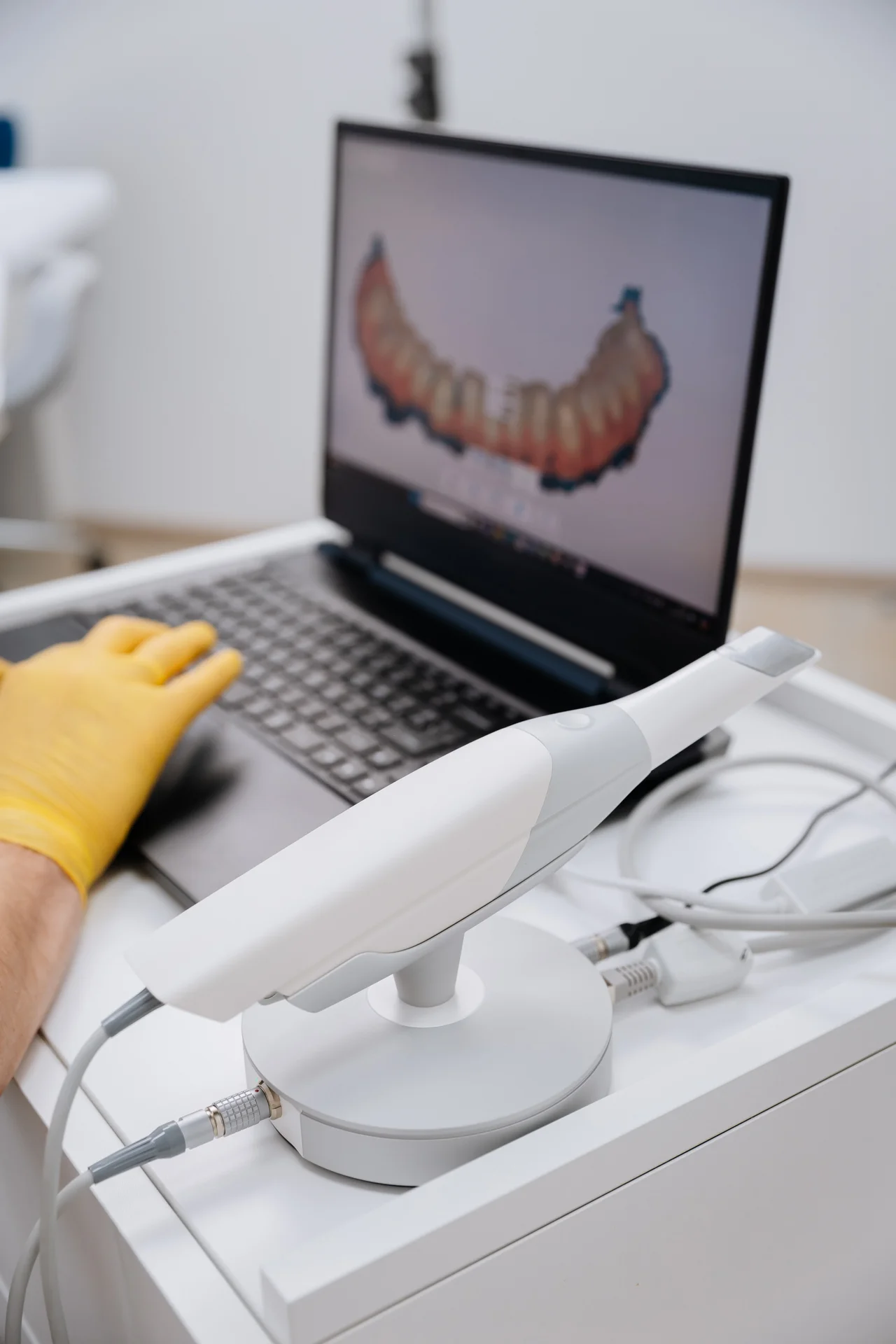
Instead of the trays and impression material used in older dentistry, Dr. Randi uses digital impression technology to capture a digital scan of your teeth and gums. A small handheld scanner takes a series of images and builds a detailed, three-dimensional model of your mouth in just a few minutes. That model becomes the starting point for crowns, bridges, veneers, and other restorations. You can learn more about this process on our digital impression workflow page.
How Digital Scanning Improves Accuracy
Digital scans help reduce the distortion that can sometimes happen with physical impression material, especially around tight spaces between teeth. Because Dr. Randi can review the scan on screen right away, he can check margins and bite alignment before a restoration is ever made. That extra review step reflects the detail-oriented approach that comes with his prosthodontic training, and it helps restorations fit better the first time around.
3D Cone Beam CT Scanning
For implant cases and more complex restorative work, Dr. Randi uses 3D cone beam CT scanning to get a complete picture of your jaw. Unlike a standard flat X-ray, cone beam CT imaging shows bone height, bone density, and the position of nerves and sinuses in three dimensions. This kind of imaging is common for prosthodontists planning implant-supported dentures, All-on-X, or single tooth implants, because it reveals anatomy that a flat X-ray simply cannot show.
What CT Imaging Reveals Before Treatment
A cone beam CT scan helps Dr. Randi see exactly how much bone is available for an implant and whether grafting might be needed first. It also shows the location of structures like the sinus floor or the nerve canal in the lower jaw, so treatment can be planned safely around them. This level of detail supports more predictable, better-informed implant placement.
Computer-Guided Implant Planning
Once a CT scan is complete, Dr. Randi can use computer-guided implant planning software to map out the exact position, angle, and depth for each implant before surgery ever begins. This planning step connects directly to the imaging and digital scanning described above, rather than working as a separate step. It's part of the same specialist-trained approach that guides our dental implant care, whether you need a single replacement tooth or a full-arch solution.
Why Choose
Benefits of Advanced Dental Technology for Patients
Together, these tools are designed to support more predictable outcomes across implant, restorative, and cosmetic treatment. Digital scanning helps restorations fit more accurately. CT imaging and guided planning help implants get placed with more precision. For patients, this often means fewer adjustment visits and restorations built to hold up over time. This same technology-supported approach carries through our restorative dentistry care, where fit and long-term function matter just as much as how a smile looks.
with questions before your visit.
Good To Know
Frequently Asked Questions
Is digital scanning more comfortable than traditional impressions?
Most patients find digital scanning more comfortable than traditional impression material. There is no tray to bite down on and no material to set in your mouth. The scanner is a small wand that moves around your teeth, and the process is usually quick.
Does CT scanning add extra appointments or cost?
Cone beam CT scanning is typically done as part of your implant or complex restorative planning, not as a separate visit added on later. Whether imaging is needed depends on your treatment plan. Our team can review insurance and cost questions with you directly, so call our office for specifics on your situation.
How does technology improve implant planning accuracy?
Computer-guided implant planning lets Dr. Randi map out implant position using your CT scan before surgery starts, rather than relying only on judgment during the procedure. This helps account for available bone, nerve position, and the final restoration from the very beginning. The result is a plan built around your specific anatomy.
Restoring Function. Rebuilding ConfidenceCurious How Our Technology Shapes Your Treatment Plan?
Our team is glad to walk you through the tools behind your care before you ever schedule a visit.
Contact Us if you have questions before scheduling.